Get Help Today! | 978.474.8670

Slip and fall on ice in Massachusetts can make the person or business that controls the area liable if it failed to use reasonable care, which can mean an owner, a landlord, a property manager, a snow removal contractor, or, in limited cases, a town. Since 2010, snow and ice get the same reasonable care standard as any other hazard.
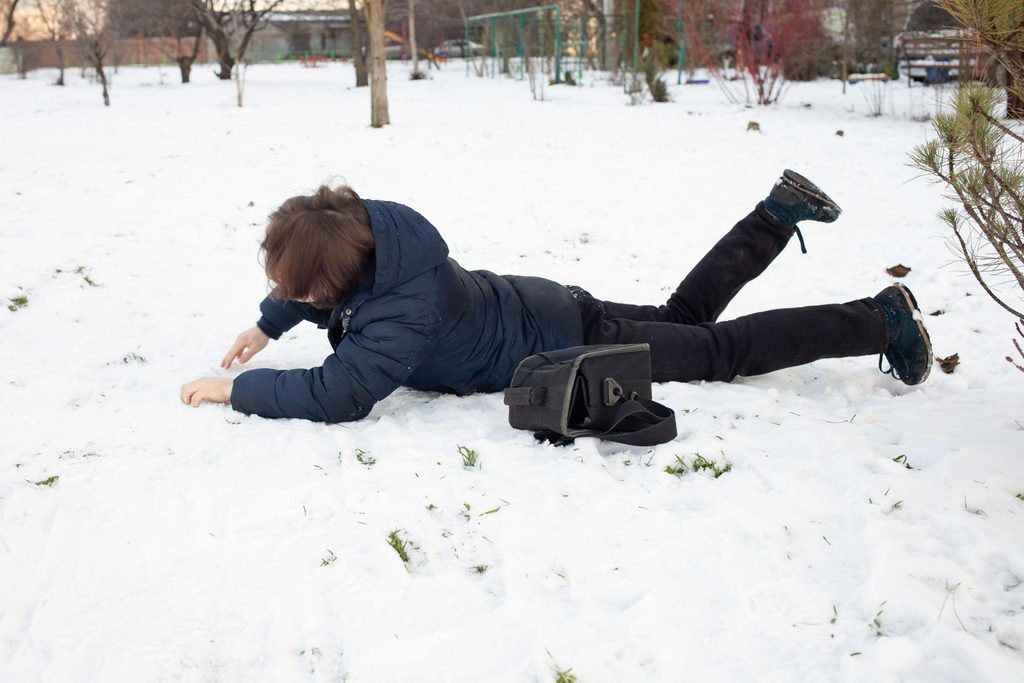
Liability turns on who controlled the area, what that person knew about the ice, and how long it had been there. The model jury instruction used in Massachusetts Superior Court asks whether the owner caused the condition, knew about it and failed to fix it, or should have known because it had been there long enough.
Kiley Law Group’s founder has represented injured people for more than 50 years. If you were hurt on ice in Massachusetts, we can explain where you stand. Call 888.733.9203 for a free consultation.
If you slipped on ice, who is liable? It depends on where you fell. This table shows who may be responsible in four common places and what the courts have said.
| Where you fell | Who may be responsible | What the courts have said |
|---|---|---|
| Store or business lot | The business that controls the area, and sometimes the contractor it hired to clear snow | In Papadopoulos v. Target Corp., a shopper slipped on ice in the lot of a Danvers store. He sued Target, which controlled that part of the lot, and the contractor retained to remove snow and ice. |
| Apartment or rental | The landlord, for common areas and driveways, and sometimes a plowing contractor | In Goreham v. Martins, a Salem tenant fell on ice in the driveway beside his building and sued his landlords and the plowing contractor. A jury found the landlords negligent and the contractor not. Injury damages come through a negligence claim, not the warranty of habitability. |
| Private home | The homeowner, to people lawfully on the property | The SJC named a single-family home, an apartment house, a store and a nursing home as owners who each owe reasonable care, but what counts as reasonable snow removal may differ among them. |
| Public sidewalk or road | It depends on who is responsible for that way | A town is not liable for snow or ice on a public way if the spot was otherwise reasonably safe (c. 84, §17). Local rules decide who clears sidewalks. See the Andover section below. |
| Slipping on ice does not by itself make an owner liable. The SJC has quoted the rule that the simple fact a person slips on ice on another’s property does not subject the owner to liability. You still have to show the owner failed to use reasonable care. |
For a general overview, see our guide to who is liable for a slip and fall accident.

Reasonable care, the same as for any other hazard. Massachusetts snow and ice law changed in 2010. Before then, the state followed a “natural accumulation” rule that protected owners who failed to remove snow and ice in its natural state. In Papadopoulos, the Supreme Judicial Court abolished that rule.
Now an owner who knows or reasonably should know of a dangerous condition, whether it comes from ice, a rusted railing, or a discarded banana peel, must make reasonable efforts to protect lawful visitors. The court said this does not make an owner an insurer of the property. The snow removal expected depends on the foot traffic, the size of the risk, and the burden and expense of clearing.
That is why a busy store lot and a single-family driveway are judged differently. The same duty applies to both, but a reasonable owner may be expected to do different things.
The model jury instruction on premises liability lists what a claim takes:
That is why photos, the time of your fall, and the weather that day matter. They help show how long the ice had been there.
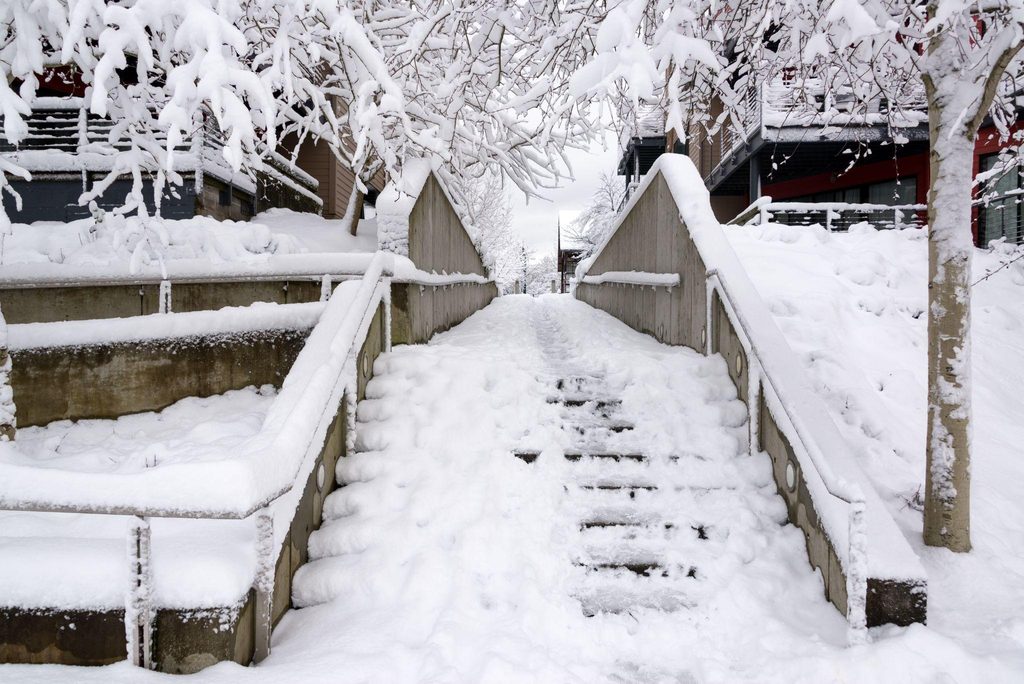
Massachusetts has a notice rule for snow and ice injuries. Section 21 of chapter 84 applies the notice provisions in sections 18 to 20 to claims against private owners over the defective condition of their premises or adjoining ways when snow or ice caused it. Section 18 sets the time: you give notice within 30 days of the injury.
Section 21 allows the notice to be given by posting it in a conspicuous place on the premises and leaving it with anyone who occupies them. For a fall on a public way, the notice goes to the county, city, town or person obliged to keep the way in repair. Your notice should include:
| Give notice within 30 days of your fall. Missing it does not automatically end your claim, because the owner has to prove the delay prejudiced it. Do not count on that. Put the notice in writing, keep a copy, and remember it is separate from the three-year deadline to file a lawsuit in c. 260, §2A. |
In a slip and fall on ice lawsuit, owners often argue the ice was open and obvious. The SJC has said that even if snow and ice were viewed that way, the fact alone does not always relieve an owner of the duty of reasonable care. It is not reasonable to leave ice on a walkway where a visitor would be expected to cross it rather than turn back.
Fault is the other defense. Under M.G.L. c. 231, §85, your own negligence does not bar recovery unless it is greater than that of the people you are seeking recovery from, and your damages are reduced by your share.
Goreham shows how this works. The tenant left through his building’s rear fire escape because it was easier, and slipped on the icy driveway. A jury found the landlords negligent but also found the tenant 53% at fault, so he recovered nothing.

Local rules matter on public sidewalks. The Town of Andover’s winter tips say snow and ice removal on sidewalks in the downtown Central Business District is the responsibility of the property owners. Town crews normally do not begin plowing sidewalks until all road clearing is finished, and the town does not clear private roadways unless it has agreed to.
If you fell on an icy sidewalk or private road in Andover, who was responsible for that spot can change your claim.
Yes, if the owner or whoever controlled the area did not use reasonable care to deal with the ice. Since Papadopoulos v. Target Corp., ice is judged by the same reasonable care standard as other hazards, and the natural accumulation defense no longer applies. You still have to show the owner caused the ice, knew about it, or should have known because it was there long enough. Our frequently asked questions page covers more.
The Supreme Judicial Court left that question open in Papadopoulos. It noted that Connecticut lets owners wait until a storm ends and a reasonable time afterward, and said the question should wait for a case with those facts. The standard the court set is reasonable care in light of all the circumstances.
Yes, you can bring a negligence claim against a landlord who unreasonably fails to clear ice from a common area or driveway. In Goreham v. Martins, the SJC held that a tenant cannot recover personal injury damages for that kind of fall under the warranty of habitability, so negligence is the route. Your own fault counts too, and the tenant in that case was found 53% at fault.
It is harder. Under M.G.L. c. 84, §17, a county, city or town is not liable for an injury on a public way caused by snow or ice if the place was otherwise reasonably safe and convenient for travelers. If you are hurt on a public way, you also have to give notice within 30 days under §18.
Missing it does not automatically end your claim. Under c. 84, §18 and §21, failing to give notice for a snow or ice injury is not a defense unless the owner proves it was prejudiced by the delay. Give notice as soon as you can anyway, and note that the three-year limit to file a lawsuit in c. 260, §2A is separate.
Who is liable for ice depends on who controlled the area, what they knew and what they did about it. Our Massachusetts slip and fall lawyers will look at your fall, the 30-day notice and any offers, and explain where you stand.
There is no fee until we win. Call 888.733.9203 for a free consultation. You can also visit our Andover office at 342 N. Main St., Andover, MA 01810, or contact us online.
This article is for general informational purposes only and does not constitute legal advice. Massachusetts laws cited include M.G.L. c. 84, §§17, 18 and 21; M.G.L. c. 231, §85; and M.G.L. c. 260, §2A. Cases discussed include Papadopoulos v. Target Corp., 457 Mass. 368 (2010), and Goreham v. Martins, 485 Mass. 54 (2020). Laws change; consult a licensed Massachusetts attorney for advice specific to your situation.