Get Help Today! | 978.474.8670

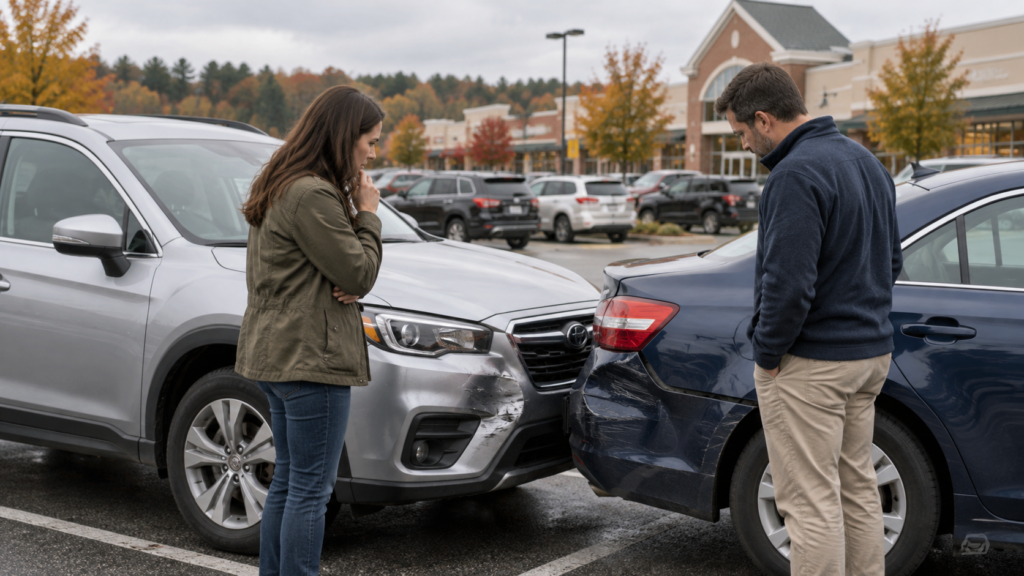
About 20% of all car accidents in the United States happen in parking lots. The National Safety Council estimates that roughly 60,000 people are injured and 500 are killed in parking lot crashes every year. These collisions rarely make the news. They do not shut down highways or draw television cameras. But the injuries they cause are real, and the medical bills that follow them are not minor.
Insurance companies treat parking lot collisions and low-speed crashes as nuisances. They use a strategy the industry calls MIST, which stands for Minor Impact Soft Tissue, to deny or minimize claims from collisions that produced little visible vehicle damage. The logic is simple: if the car looks fine, the driver must be fine. Medical science says otherwise.
Kiley Law Group has recovered more than $1 billion for injured clients across Massachusetts and New Hampshire over more than 50 years. We have handled thousands of cases that insurance companies tried to dismiss as minor. If you were hurt in a parking lot collision or a low-speed crash anywhere in Massachusetts, you have legal rights. Call 978-474-8670 for a free consultation.
The most important thing to understand about low-speed collisions is that the human body is more fragile than the car it sits in. Modern vehicles are engineered to absorb impacts at speeds of 12 to 15 mph without showing significant damage. But the threshold for soft tissue injury in the human neck begins at just 5 mph. That gap is the core problem.
Research published in the Journal of Trauma documents what biomechanics experts call the "low-damage collision paradox." At impact speeds of 8 to 10 mph, a rear-end collision produces minimal visible damage to the vehicle but generates head acceleration forces of 5 to 7g. The threshold for cervical strain is approximately 5g. That means a crash that barely dents a bumper can produce enough force to tear the ligament fibers in your neck.
When cervical ligaments are micro-torn, they do not heal to their original strength. They repair with scar tissue that is biomechanically weaker than the original ligament, creating chronic instability and long-term pain. A collision at parking lot speeds can produce injuries that last for months or years.
Whiplash symptoms commonly appear 24 to 72 hours after the collision, not at the scene. Adrenaline and stress hormones mask pain in the immediate aftermath of a crash. The body's inflammatory response takes time to develop, and soft tissue swelling may not reach its peak for days.
This delay is one of the biggest reasons parking lot accident claims run into trouble. A driver who feels fine at the scene tells the other driver "I'm okay," declines an ambulance, and goes home. Two days later, the neck stiffness, headaches, and radiating arm pain begin. The insurance company will use that gap to argue the injury was not caused by the crash. Medical research is clear that delayed onset is normal for whiplash. Early detection within 24 hours reduces the risk of chronic pain by up to 50%. That is why getting examined by a doctor promptly after any collision matters, even if you feel fine.
Parking lots are private property, but Massachusetts negligence law still applies. Drivers owe a duty of care to other drivers, passengers, and pedestrians in a parking lot, just as they do on a public road. The fact that a crash happened on private property does not shield the at-fault driver from liability.
In Massachusetts, if you hit another vehicle or a pedestrian while backing up, you are presumed to be at fault. This presumption applies whether you are backing out of a parking space, a driveway, or an alley. The American Automobile Association reports that 91% of parking lot incidents involve a driver backing up. The driver in reverse has the greater duty to check that the path is clear.
This presumption is not absolute. If the other driver was speeding through the lot, driving the wrong way, or texting behind the wheel, they may share fault. But the starting point for any backing-up collision puts the burden on the driver who was in reverse.
Parking lots have their own hierarchy of right-of-way, even though many drivers ignore it.
Parking lot pedestrian crashes are disproportionately deadly for children under 5 and adults over 70. NHTSA data shows that when restricted to backover fatalities involving passenger vehicles, children under 5 account for 44% of deaths and adults 70 and older account for 33%. These are the people least likely to be seen in a rearview mirror and least able to move out of the way quickly.
If you or your child was struck by a vehicle in a parking lot, the driver who hit you is likely liable for your injuries. The fact that you were walking in a parking lot does not make you at fault. Drivers are expected to look for pedestrians in every direction before moving.
Insurance companies have built an entire infrastructure to deny claims from low-speed collisions. The industry term is MIST: Minor Impact Soft Tissue. Under MIST protocols, adjusters are trained to flag any claim where property damage is below $1,000 and the injuries are to soft tissue. The claim is then routed to a specialized unit designed to minimize or deny it.
The steps you take in the hours and days after a parking lot collision determine the strength of your claim. Insurance companies look for gaps in your documentation and exploit them.
The same insurance and liability rules that apply to any Massachusetts car accident apply to parking lot collisions. The location does not change your legal rights.
Yes. Massachusetts negligence law applies on private property, including parking lots. If another driver was at fault for the collision, you can file an insurance claim and, if your injuries meet the serious injury threshold, a personal injury lawsuit. The fact that the crash happened in a parking lot does not reduce your legal rights.
In Massachusetts, the driver who is backing up is presumed to be at fault. The driver in reverse has a duty to ensure the path behind them is clear before moving. This presumption can be rebutted if the other vehicle was speeding, driving the wrong way, or engaged in negligent behavior, but the default liability rests with the reversing driver.
Yes. Biomechanics research shows that whiplash injuries can occur at impact speeds as low as 5 mph. At 8 to 10 mph, a rear-end collision generates 5 to 7g of force on the occupant's head, which is above the threshold for cervical ligament strain. The amount of visible vehicle damage does not predict the severity of the occupant's injury.
Delayed symptoms are medically normal for whiplash and other soft tissue injuries. Symptoms typically emerge 24 to 72 hours after the collision due to the body's inflammatory response. Insurance companies may try to use the delay against you, but medical literature supports the connection between the crash and the delayed onset of symptoms. See a doctor as soon as symptoms appear and reference the crash.
Police may not respond to minor crashes on private property. However, if there are injuries or property damage exceeds $1,000, Massachusetts law requires you to file a Motor Vehicle Crash Operator Report within five days. You can file at any police station or online through Mass.gov. Even if a police report is not required, filing one creates an official record that strengthens your claim.
MIST stands for Minor Impact Soft Tissue. It is an insurance industry protocol that flags claims from low-speed collisions with less than $1,000 in property damage. Adjusters trained in MIST are instructed to deny or minimize these claims based on the theory that minimal vehicle damage means minimal injury. This theory contradicts published medical research, and an experienced attorney can counter it with biomechanics evidence and expert testimony.
Insurance companies want you to believe that a parking lot collision is not worth pursuing. They count on you accepting a lowball offer or walking away from your claim entirely. Do not let them.
The injuries from low-speed crashes are real. The medical bills are real. The lost time at work is real. You deserve an attorney who knows how to fight the MIST defense and build a case that reflects the true cost of your injury.
Kiley Law Group has recovered more than $1 billion for injured clients across Massachusetts and New Hampshire over more than 50 years. Call 978-474-8670 for a free consultation today.
This article is for general informational purposes only and does not constitute legal advice. Massachusetts laws cited include M.G.L. Ch. 231 Section 85 (comparative negligence), M.G.L. Ch. 231 Section 6D (serious injury threshold), M.G.L. Ch. 260 Section 2A (statute of limitations), and M.G.L. Ch. 229 (wrongful death). Laws change; consult a licensed Massachusetts attorney for advice specific to your situation.