Get Help Today! | 978.474.8670
After a rideshare crash, most people assume that liability works the same way it does in any other car accident. It does not. Uber and Lyft have built their business models around classifying drivers as independent contractors, which creates real legal distance between the company and the person behind the wheel. When you are the one injured, that distance can feel like a wall.
Liability in an Uber or Lyft accident is rarely a straight line. The driver's conduct, the driver's status in the app, the involvement of other motorists, and even the rideshare company's own hiring decisions can all factor into the claim. Sorting through those layers is what separates a fair recovery from a lowball insurance offer.
Kiley Law Group has represented injury victims in Massachusetts and New Hampshire for more than 50 years and has recovered over $1 billion for clients. If you were hurt in a rideshare accident, call our office today for a free consultation.
A standard two-vehicle collision usually involves two drivers and two personal auto policies. A rideshare accident can involve four or more potentially liable parties and a coverage structure that shifts depending on what the driver was doing at the exact moment of the crash.
Uber and Lyft are classified as transportation network companies (TNCs) under Massachusetts law. Both companies treat their drivers as independent contractors rather than employees, which limits the situations in which the corporation can be held directly responsible for a driver's negligence. That classification is the first hurdle in most rideshare claims, and it is the reason these cases benefit from early legal involvement.
In most Uber and Lyft accidents, the rideshare driver is the first party evaluated for liability. A driver who causes a crash through careless or reckless conduct can be held personally responsible for the resulting injuries and losses.
Rideshare drivers are under constant pressure to complete trips quickly, navigate unfamiliar routes, and interact with the app while driving. That pressure often produces the kind of negligence that leads to serious crashes.
When any of these behaviors cause a collision, the rideshare driver can be named as a defendant in a personal injury claim, just like any other at-fault motorist.
Holding the driver personally liable is straightforward in theory. In practice, a personal injury claim against an individual driver is only as valuable as the insurance coverage that responds. That is where Uber and Lyft's insurance structure, governed by the Act Regulating Transportation Network Companies, becomes critical. The driver's status in the app at the moment of the crash determines which policy applies and how much coverage is available.
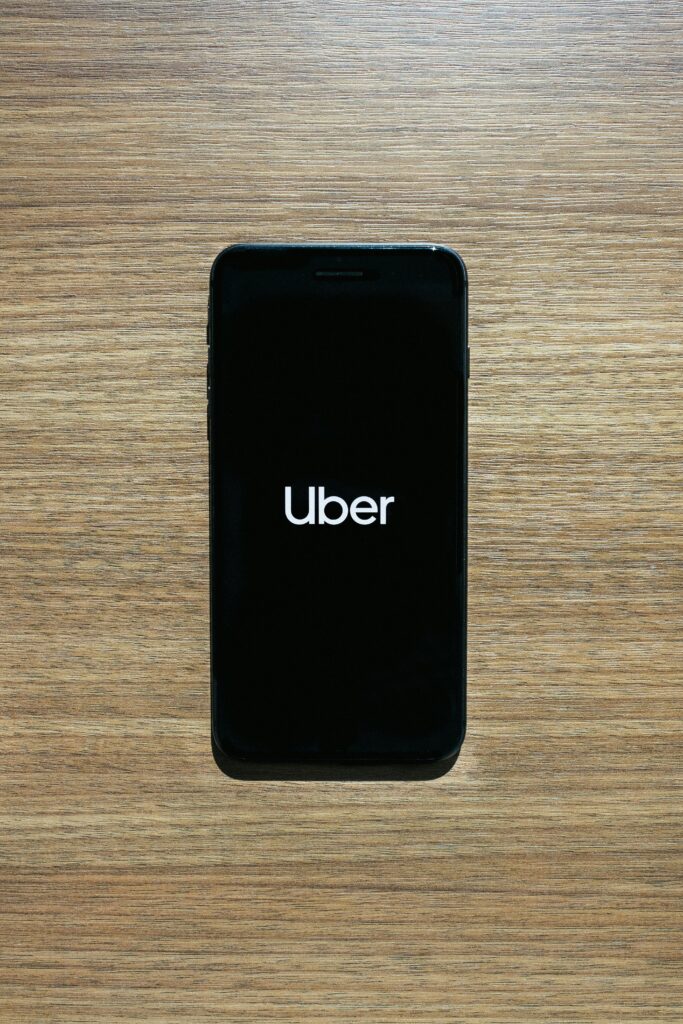
While both companies fight hard to keep liability at the driver level, Massachusetts law still allows injured parties to pursue direct claims against Uber or Lyft in specific circumstances.
Uber and Lyft are responsible for screening the drivers they allow onto their platforms. If the company approved a driver with a disqualifying history, such as prior DUI convictions, a pattern of moving violations, or a record of violent incidents, and that driver later caused a crash, the injured party may have a negligent hiring claim. The same logic applies to negligent retention, which looks at whether the company kept a driver on the platform after red flags emerged.
If Uber or Lyft fails to enforce its own safety policies, such as vehicle inspection requirements, driver hour limits, or responses to passenger complaints, that failure can contribute to a claim. A driver who was reported multiple times for unsafe driving but remained active on the platform is a clear example.
The independent contractor classification has been challenged repeatedly in Massachusetts. State lawmakers and the attorney general have pushed back on the structure, and settlements and legislative changes continue to shift the ground under rideshare companies. What was once a closed door on direct corporate liability is now a door that opens in specific fact patterns.
Many rideshare crashes are caused by a third-party motorist, not the Uber or Lyft driver. A driver who runs a stop sign and T-bones a Lyft vehicle, or rear-ends an Uber at a red light, is the at-fault party. In those cases, the third-party driver's personal auto insurance is the primary source of compensation.
This matters because rideshare passengers are not limited to the rideshare company's policy. If another driver caused the crash, the injured passenger can pursue that driver's policy first. If the at-fault driver is uninsured or carries low limits, the rideshare company's uninsured and underinsured motorist coverage may apply as a backup, particularly during an active ride.
Liability in a rideshare case is not always limited to the people inside the vehicles. Other parties can share responsibility when their negligence or product failure played a role in the crash.
Even when liability is clear, the practical question of who actually pays for the damages depends on the driver's status in the Uber or Lyft app. Massachusetts law divides that status into three periods, each with a different level of available coverage. Understanding those periods is critical to any rideshare claim.
Learn more about what insurance covers Uber and Lyft accidents in Massachusetts.
Rideshare accident cases live and die on evidence. By the time most injured people think to call a lawyer, some of that evidence is already at risk. Kiley Law Group moves quickly to preserve the records that matter.
The Uber driver is typically liable for an accident they caused through negligence. However, the insurance that pays the claim usually comes from Uber's commercial TNC policy rather than the driver's personal auto insurance, depending on the driver's app status at the time of the crash. In limited cases, Uber itself may face direct liability for negligent hiring or retention.
Yes, but only in specific situations. Uber and Lyft classify their drivers as independent contractors, which limits the company's direct liability in most cases. Direct claims typically require proof that the company itself acted negligently, such as approving a dangerous driver or failing to respond to prior safety complaints. Most claims proceed against the driver, with coverage paid by the TNC's insurance.
Massachusetts applies modified comparative negligence rules to personal injury claims. As long as the injured party is not more than 50 percent at fault, they can recover compensation, reduced by their percentage of responsibility. In a rideshare accident, it is common for the rideshare driver, a third-party motorist, and sometimes the rideshare company itself to each carry a share of the fault.
Proving fault in a rideshare accident requires the same evidence as any car crash, plus rideshare-specific documentation. Police reports, witness statements, photos of the scene, and medical records establish the basic facts of the collision. On top of that, the rideshare driver's app status, trip data, and message history help identify which party is responsible and which insurance applies. An attorney can request this information before the company deletes or archives it.
Do not take the rideshare company's position at face value. Uber and Lyft have a financial incentive to shift liability away from their platform, especially when the $1 million policy is at stake. An experienced rideshare accident attorney can independently investigate the crash, preserve app data, and pursue every available source of coverage rather than accepting the company's initial liability determination.
Liability in an Uber or Lyft accident is rarely simple, but you do not have to untangle it alone. Kiley Law Group has the experience, the resources, and the track record to hold every responsible party accountable, from the driver to the rideshare company to any third party whose negligence contributed to your injuries.
Contact Kiley Law Group today for a free consultation. There is no fee unless we recover compensation for you. Our attorneys serve clients across Massachusetts and New Hampshire from offices in Andover, Rye, and Manchester. We can meet with you at home, in the hospital, or virtually.
This page is for general informational purposes only and does not constitute legal advice. Massachusetts law referenced includes Mass. Gen. Laws Ch. 175, §228 (TNC insurance requirements) and Mass. Gen. Laws Ch. 260, §2A (statute of limitations). Laws change; consult a licensed Massachusetts attorney for advice specific to your situation.